

Ball Mill and SAG Mill Liners: Shell Liners, Lifter Bars and Diaphragms
Complete liner sets for ball mills, SAG and AG mills: shell liners, end liners and lifter bars, plus slotted chamber diaphragms. Cast in high-chromium white iron (Cr 23–28%, HRC 58–65) and chromium-molybdenum alloy steel (HB 300–400), for mills from 2 to 8 m diameter. Liner sets are designed together — shell profile, lifter height and diaphragm slotting matched to your mill size and media charge. For crushing-machine wear parts, see our crusher wear parts catalog; the casting capability behind these liners is on our metal casting page.
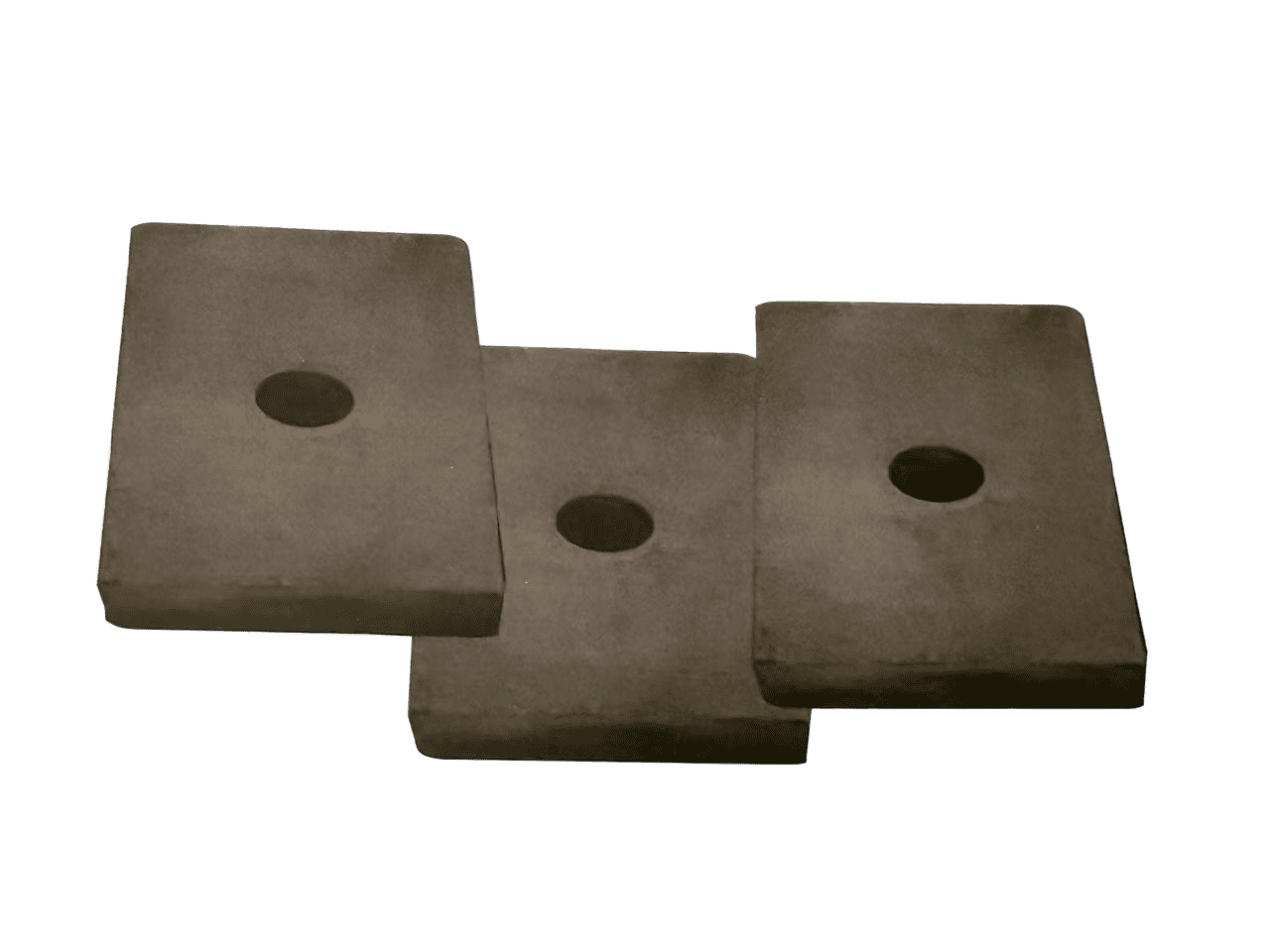
Mill Liner Parts We Cast
| Part | Role | Materials |
|---|---|---|
| Shell liners | Protect the mill shell, carry the charge | Hi-Cr iron (Cr 23–28%) or Cr-Mo steel |
| End liners | Feed and discharge end protection | Hi-Cr iron, Cr-Mo steel |
| Lifter bars | Lift and drop the grinding charge | Cr-Mo steel (SAG feed end) / Hi-Cr (shell) |
| Slotted diaphragms | Control flow between chambers, classify by size | Cr-Mo steel, single or double deck, slot 5–12 mm |
Material Selection
| Duty | Recommended |
|---|---|
| Metal mining SAG mill — coarse feed, high impact | Cr-Mo steel at the feed end and lifters; Hi-Cr on the shell |
| Ball mill (secondary grinding) — moderate impact, high abrasion | Hi-Cr iron throughout |
| Cement mill — low impact, high abrasion | Hi-Cr iron |
| Coal mill — moderate wear | Hi-Cr iron |
Hi-Cr vs Cr-Mo — the trade-off: high-chromium iron (HRC 58–65) wins on abrasion and holds slot/profile geometry for 12–24 months in ball-mill duty; Cr-Mo steel (HB 300–400, tougher) survives the impact of SAG feed-end duty where an iron casting would crack. Current best practice is the composite layout above — steel where impact lives, iron where abrasion lives.
Why Liner Design Matters
Liner profile sets mill throughput and energy draw: lifter height and face angle control how the charge is lifted and dropped, and worn lifters cascade instead of cataracting — dropping grinding efficiency and raising energy per ton. Slot layout in the diaphragm controls how fast material moves between chambers, setting the final fineness and avoiding over-grinding. We optimize profiles against mill diameter, speed and media charge, then cast to them; worn liners are dimensioned back to the drawing on delivery.
Manufacturing and Quality Control
Sand casting; quench + temper for Hi-Cr grades (M₇C₃ carbide structure) and Cr-Mo (HB 300–400 tempered); furnace-front temperature plus sample-block chemistry before every pour; hardness, microstructure and dimensional checks; ISO 9001; material and test reports supplied. Service life reference: Hi-Cr shell liners 12–24 months (ball mills), Cr-Mo in SAG duty 6–12 months.
Request a Quote
Send the mill size, liner drawing or the worn liner — quote within 24 hours. Samples available for wear-trial validation before volume orders.
