


Heat resistant casting is used to make metal parts that must work in very hot places. These places can be furnaces, ovens, kilns, and power plants. In these places, normal metal can melt, bend, or crack. Heat resistant casting helps metal parts stay strong and safe. For component-specific guidance — furnace grate bars, burner nozzles, and support beams — see our heat-resistant furnace castings guide.
When metal gets too hot, it can slowly change shape. It can also rust faster or break when it cools down. Heat resistant casting is made to stop these problems. It helps machines work longer and more safely.
In this guide, we will explain heat resistant steel casting and why some methods are better for hot parts.
Understanding Heat Resistant Steel Casting
Heat resistant steel casting is made for parts that must stay strong in high heat. In many factories, temperatures can go above 650°C (1200°F). At this heat level, normal steel and iron start to get weak.
Heat resistant steel is different. It is made to stay strong even when it gets very hot. It does not bend easily. It does not crack as fast. It can also handle heating up and cooling down many times.
What Heat Does to Metal
The electrical, magnetic and structural properties of metals can be changed through heat. As the applications of metal are varied, different environments prioritize different qualities.
There are a number of ways of heating metal, which are commonly used to transform these properties. The temperature to which the metal is heated and the rate of cooling are carefully controlled to achieve the desired outcome.
Heat changes metal in many ways. When metal stays hot for a long time, it can slowly stretch. This slow stretch is called creep. You may not see it at first, but over time it can cause parts to bend or sag.
Heat also causes metal to react with air. This makes a hard, flaky layer on the surface. This layer is called scale. Too much scale can damage the part.
When metal cools down again, it can become hard and break easily. This happens when the metal is not made to handle fast temperature changes.
Why Special Metals Are Added
Heat resistant steel is made by adding special metals. The two most important ones are chromium and nickel.
Chromium helps protect the metal surface. When metal gets hot, chromium helps form a thin shield on the outside. This shield slows down rust and damage from hot air.
Nickel helps the metal stay tough. It keeps the steel from becoming too hard and breaking when it cools down. Nickel also helps the metal handle heat without losing strength.
Why ASTM A297 Matters
Choosing the right casting material for your project is one of the most important decisions you can make for the success of your operation. The material you select will directly impact your component’s performance, durability, cost, and overall quality.
Most heat resistant steel castings follow a rule called ASTM A297. This rule explains how heat resistant steel should be made. It tells how much chromium and nickel should be in the metal.
ASTM A297 also gives names to common heat resistant steels. These names include HF, HH, HK, and HU. Engineers and foundries use these names to choose the right metal.
ASTM A297 does not promise that a part will last forever. The life of a part still depends on heat level, weight, and working conditions. But this rule helps make sure the steel is good enough for hot work.
Heat Resistant Steel vs. Cast Iron
Heat resistant steel and cast iron are both used in hot machines. But they do not act the same way.
Heat resistant steel is strong when it is pulled or bent. It can stretch a little without breaking. This makes it better for parts that move or carry weight in high heat.
Cast iron is strong when it is pressed down. It also helps reduce shaking and noise. But cast iron breaks more easily when pulled or bent. At high heat, it can crack faster than steel.
Because of this, heat resistant steel is often used for parts inside furnaces and heaters. Cast iron is more often used for covers, frames, and low-stress parts.
Heat Resistant Paint and Its Limits
Some cast iron parts are covered with heat resistant paint. This paint helps protect the surface from rust and scale. It can also make parts look cleaner.
Most heat resistant paints work up to about 600 to 650°C. Above that, paint can burn, peel, or crack.
Paint does not make metal stronger. It cannot stop metal from bending or stretching. It also cannot protect the inside of the part. If a part works in very high heat, using better metal is more important than using paint.
The Centrifugal Foundry Advantage
Centrifugal castings are sometimes referred to as liquid forgings. The centrifugal casting process is unlike other foundry processes in that it requires special knowledge, practices and skills not usually found in other types of foundry operations.
Many heat resistant parts are made using a method of centrifugal casting. This method is often used for round parts like tubes and rings.
In the centrifugal casting process, molten metal is poured into a hollow cylindrical mold spinning about a horizontal or vertical axis at speeds generating more than 100 Gs of centrifugal force.
Why Centrifugal Casting Is Better for Hot Parts
Centrifugal casting helps remove air from the metal. Air bubbles can make weak spots. When the mold spins, air is pushed away. This makes the casting more solid.
The spinning also moves dirt and unwanted material toward the inside. Later, that inside layer is cut away. This leaves better metal in the final part.
Another benefit is how the metal cools. The grains inside the metal form in a neat and even way. This helps the part resist cracking when it heats up and cools down again.
Because of these benefits, centrifugal casting is often used for furnace tubes, heater rollers, and hot pipes.
Common Heat Resistant Steel Grades (ASTM A297)
Heat resistant steel is not all the same. There are different types made for different heat levels and jobs. These types are called grades. Each grade has a special mix of metals that helps it work better in certain conditions. Selecting the correct induction hardening frequency depends on required case depth, component size, and steel grade.
Most heat resistant steel castings follow a rule called ASTM A297. This rule helps make sure steel castings are safe and strong when used in very hot places. It also gives common names to heat resistant steels so foundries, engineers, and buyers can understand each other easily.
The table below shows four common ASTM A297 heat resistant steel grades.
| ASTM A297 Grade | Type of Steel | Max Working Temperature | Common Uses |
| HF | Steel with chromium and nickel | Up to 870°C | Burner tips, furnace parts, light heat supports |
| HH | Steel with more chromium | Up to 1095°C | Heat treating fixtures, grate bars, rails |
| HK | Steel with high chromium and nickel | Up to 1150°C | Furnace tubes, reformer tubes, kiln parts |
| HU | Steel with very high nickel | Up to 1150°C | Parts with fast heating and cooling, heavy-duty furnace work |
Understanding the Grades in Simple Terms
When people ask us which heat resistant steel grade to choose, the real answer is always:
“It depends on the heat, the load, and how the part is used.”
Over the years, we’ve seen the same grades come up again and again. Below is how we explain them to plant managers, maintenance teams, and buyers.
Grade HF – Good for Moderate Heat
Grade HF is often the first step into heat resistant steel. HF is commonly used in furnace components, heat-treat fixtures, radiant tubes, and other structural parts exposed to continuous or cyclic thermal loads. Its stable austenitic structure ensures good creep strength and dimensional stability, making it a reliable material for long-term service in industrial heating and metallurgical processing environments.
When HF works well:
- Heat is not extreme
- Parts do not carry heavy weight
- Temperature stays steady
From experience: HF does the job when conditions are calm. But if heat goes up or loads increase, it’s time to look at the next grade.
Grade HH – Built for Hotter Conditions
Grade HH can handle more heat than HF. It has more chromium, which helps protect the metal surface.
Why plants choose HH:
- Better resistance to hot air and flames
- Stronger surface protection
- Long service life in steady heat
Real-world advice: HH is a solid “workhorse” grade. If a part stays hot all day, HH usually lasts longer than HF.
Grade HK – Made for Very High Heat
Grade HK is used when parts sit close to fire or hot gas.
What makes HK different:
- High chromium for surface protection
- Higher nickel for strength at heat
- Designed for steady, very hot conditions
You’ll often find HK in:
- Furnace tubes
- Kiln parts
- Reformer and heater systems
⚠️ Important note: HK does not like fast heating and cooling. We’ve seen it last a long time when temperatures change slowly, but crack when heat swings are too fast.
Grade HU – Best for Tough Heat Cycles
Grade HU has very high nickel. This gives it strength and flexibility at high temperatures.
Why HU is chosen:
- Handles fast heating and cooling
- Less likely to crack under stress
- Strong in severe heat jobs
Our opinion: When cracking has been a problem in the past, HU is often worth the extra cost.
Industrial Applications of Heat Resistant Casting
Heat resistant casting keeps many industries running. Without it, machines would stop more often, repairs would cost more, and safety risks would rise.
Petrochemical Plants
In petrochemical plants, heat resistant castings are used inside furnaces and heaters.
These parts:
- Guide hot gases
- Support pipes carrying fuel or chemicals
- Run day and night without rest
If one part fails, the entire furnace may need to shut down. That’s why strong, heat resistant castings are critical here.
Power Plants
Power plants rely on heat resistant castings in:
- Boilers
- Heating systems
- High-temperature supports
These parts face hot steam and gas for long periods. When they work well, plants run safely. When they fail, outages happen fast.
Good castings mean fewer emergency shutdowns and less night-shift repair work.
Cement and Mining Plants
Cement and mining equipment works in some of the harshest conditions.
Heat resistant castings are used in:
- Kilns
- Coolers
- Heavy material handling systems
These parts must handle:
- High heat
- Heavy weight
- Dust and debris
Durable castings help plants run longer between repairs and reduce downtime.
Heat Resistant Coatings and Ongoing Care
Some parts are protected with heat resistant paint. This paint is usually applied to the outside of cast iron or steel parts.
What Heat Resistant Paint Can Do
Heat resistant paint helps by:
- Slowing rust
- Reducing surface damage
- Limiting surface scaling
It can also make parts easier to inspect and clean.
Where Paint Falls Short
Most heat resistant paints only work up to 600–650°C.
Above that:
- Paint can crack
- Paint can peel
- Paint can burn away
⚠️ Important truth: Paint does not make metal stronger. It cannot stop bending, stretching, or internal damage.
If the heat is high, don’t rely on paint. Choose the right heat resistant steel first.
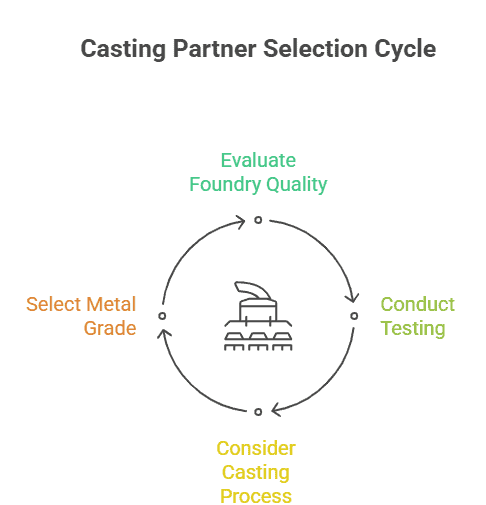
How to Choose the Right Casting Partner
Choosing the right foundry is just as important as choosing the right metal.
What to Look for in a Foundry
A good foundry will:
- Follow quality rules
- Keep clear production records
- Make castings the same way every time
This reduces defects and improves reliability.
Testing Matters
Good foundries test their castings.
They often check for:
- Cracks
- Hidden defects
- Internal flaws
These tests help make sure parts are safe before they are installed.
Ask About Centrifugal Casting
If your parts are round or tube-shaped, ask if the foundry offers centrifugal casting.
This process:
- Creates dense metal
- Reduces internal defects
- Works well for high-heat parts
Get Help Choosing the Right Grade
A good casting partner will ask questions before making parts.
They should ask about:
- Heat level
- Weight and load
- How often temperatures change
This helps avoid choosing metal that is either too weak or too expensive.
Conclusion
Heat resistant casting is needed when metal parts work in very hot places. Normal metal cannot survive these conditions for long. Whether you’re looking to improve strength, durability, machinability, or corrosion resistance, the right heat treatment process can make all the difference.
Special metals like chromium and nickel help protect steel from heat, rust, and cracking. Standards like ASTM A297 help guide material choice and quality.
Choosing the right grade and the right casting method matters. For round, high-heat parts, centrifugal casting often gives the best results.